Performance
Ten thousand pods scroll like ten.
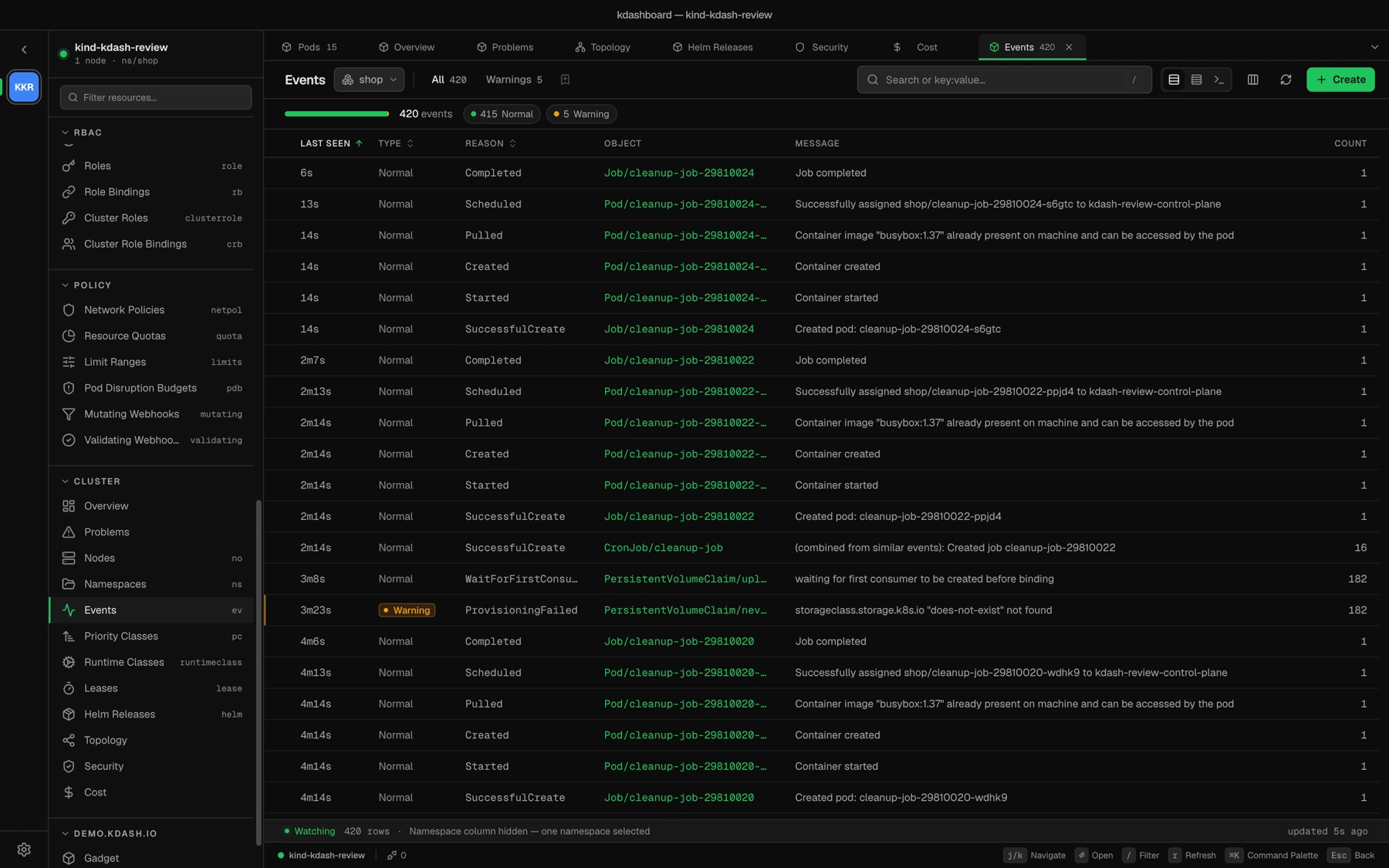
A cluster you actually operate has thousands of objects and a dozen controllers rewriting them. The list you are looking at has to stay honest without turning the window into a JSON firehose.
01
02
Lean projections, lazy detail
A row carries the fields its columns need. The full object is fetched when you open it, so a ten-thousand-pod list is megabytes, not hundreds. electron/k8s/kinds.ts · one row per kind 03
A scheduler that keeps draining
Updates are applied on a frame budget, and the queue keeps draining when the window is in the background — so a busy cluster never leaves you with a stale table. TanStack Virtual · Svelte 5 runes What you feel
Opening a 10,000-row tablescrolls at once, no spinner wall
Switching contextno reload, the window stays put
Two tabs on the same kindone watch, one stream
A controller rewriting 200 podsone repaint per frame, not 200
Window in the backgroundqueue keeps draining
Coming back after lunchwatch resumes from its resourceVersion
Measured in the repo, not on this page
kdashboard ships a Playwright benchmark harness: mount, scroll frame cost, filter and update
latency, and retained heap, at 200, 2,000 and 10,000 rows. Run it and get your own numbers —
we would rather you did that than trust a chart on a marketing page.
scripts/bench
$ bun run benchmark